
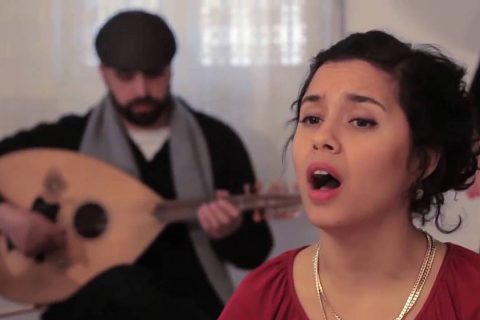
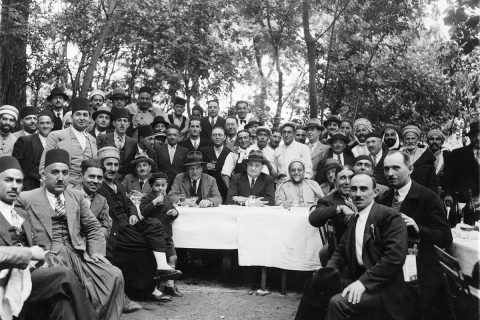
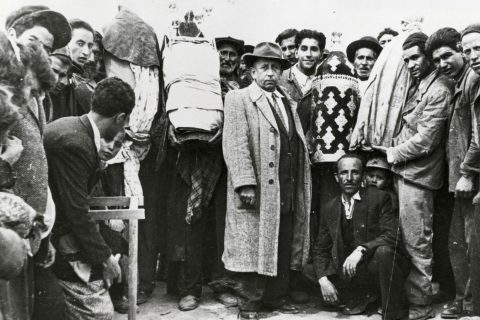
Piyut/Piyutim פיוטים, פִּיּוּט Jewish liturgical poems, have been composed across the Jewish diaspora, particularly in Spain and the Middle East. These religious poems were sung during Shabbat, weddings, and holidays and were used to inspire Jewish communities with a love the Torah, hope for a time of redemption and to instill faith in God. Students will recognize some piyutim and learn how they were sung years ago and how they continue to play an integral role in Mizrahi music in Israel.
Objectives
- Students will learn about piyutim – Sephardic Jewish liturgical poems.
- Students will read and analyze the text of a piyut.
- Students will draw connections between piyutim and modern Israeli/Mizrachi music.
- Students will sing piyutim.
Materials
- Whiteboard and markers
- Links to piyutim recordings
- computer with good sound system
- Appendix A – Piyut: Lecha Dodi
- Appendix B – Piyut: Yismach Hatani
- Appendix C – Note to Teacher (background information on piyutim)
Procedures
Introduction
- WRITE the Main Questions on the board: What are the roots of Middle Eastern Jewish music? How did this music become popular in Israel and beyond?
- To begin today’s lesson on Sephardic and Mizrachi music, students will participate in a listening exercise.
- HAND OUT Appendix A. Allow the students to read through the information about the 1st piyut, Lecha Dodi, and answer the questions in the worksheet. Discuss the responses with students.
- PLAY MUSIC. Listen to this version of Lecha Dodi (Click here) performed by the Israeli Andalusian Orchestra – Ashdod.
- DISCUSS:
- Do you recognize this music?
- Does it sound familiar to you?
- What does it sound like?
- What do you feel when you hear this music?
- What instruments do you hear?
- Why would a modern orchestra in Israel want to retain these piyutim in contemporary Israeli culture?
| NOTE TO TEACHER: If you taught Lesson 7, you can connect it to why it’s important to pass on heirlooms and keepsakes? How is a piyut like a keepsake?) |
Body of Lesson
- HAND OUT Appendix B.
- The students will follow a similar exercise to the one presented in the introduction.
- Students will REVIEW THE LYRICS of Yismach Hatani and ANSWER THE QUESTIONS
- After a discussion about the lyrics, PLAY two renditions of the song.
- The first rendition represents a traditional version that would be chanted in a synagogue.
- The second rendition (Below) demonstrates how Israeli-Mizrahi Jews have incorporated these piyutim in contemporary Israeli culture
- NOTE TO TEACHER: Sarit Hadad, famous Mizrachi singer was born in Afula to Caucasian Jewish parents and has strengthened the role of women in the Sephardic and Mizrachi music world. Her rendition of Yismach Hatani was made for the Israeli movie (The Women’s Balcony) with the same name. If you would like students to watch the video after listening to the two first renditions of this song you can do so. This music demonstrates Sarit Hadad singing and many others dancing with her.
- Students ANSWER THE QUESTIONS in Appendix B and DISCUSS.
Conclusion
As a group, LEARN THE SONG Yismach Hatani, SING AND DANCE together as a group or choose one of the extension activities to summarize the lesson).
Extension Activities
- Students research the Mizrahi music genre, its emergence and development in Israeli culture. Explore the rich music of contemporary Israeli Mizrahi singers.
- Students become DJs. Teams of students create a playlist of Mizrahi music, presenting the background of each musical artist to the class.
- Students research the verses in piyutim, locating their sources in Jewish texts and prayer books.
- Who wrote Piyutim? By looking at the composers of the piyutim, one can learn which hachamim (renowned Jewish leaders) wrote these liturgical poems. The composers of various piyutim usually used an acrostic format. Since prayer books were limited at the time, many piyutim have repeating stanzas that the congregation would respond to followed by the cantor’s recitations.
Resources and External Links
Piyut North America
From http://piyutnorthamerica.org
An Invitation to Piyut
From http://old.piyut.org.il/chosen12/english/
West Side Sephardic Synagogue
From http://www.wsssynagogue.com/sephardic-piyut.html
The National Library of Israel
From http://web.nli.org.il/sites/NLIS/he/song/Pages/default.aspx
Mizrahi Music Gets Its Rock Star Moment
The Mizrahi canon: Top classics from the margins of Israeli society
From https://972mag.com/the-mizrahi-canon-classics-from-margins-of-israeli-society/68857/
Between Arab and Maghreb



Categories:Lessons
0 Likes