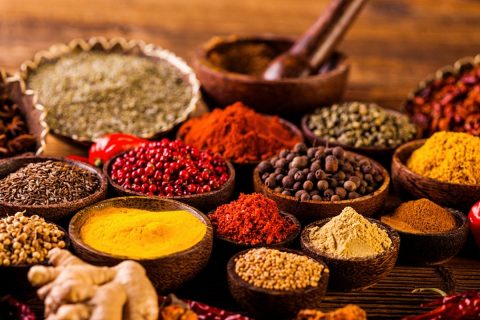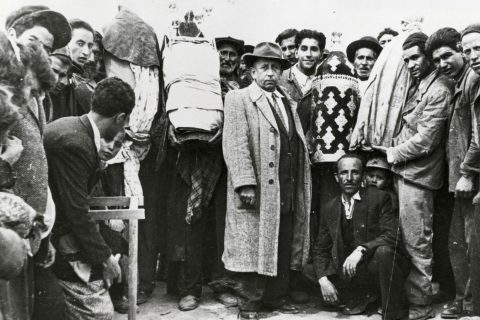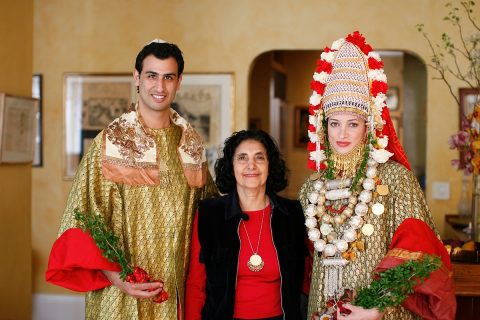
Israel is a profoundly diverse place. It is home to humans of every color and language and they all bring their unique culture and traditions from their previous countries of origin. They may have come from racial, national, cultural and religious groups that have lived in Israel for generations, or they may have just made aliyah (immigrated to Israel) last week. In this lesson, students will understand how the cuisine of the Jews from the Middle East and North Africa has influenced food choices in Israel and even around the world. Written by Galia Avidar
Objectives
- Students will explain why and how Middle Eastern Jewish foods have become staples in a given country.
- Students will identify factors that influence food choices and customs.
- Students will prepare dishes characteristic of Middle Eastern Jewish culture for the class to share.
Materials
- Whiteboard and markers
- Colored markers, crayons
- Gloves for food handling
- Food preparation- Depending on your resource there are three options for preparing food.
- Hot food preparation: kitchen, cooking supplies needed for the chosen recipe
- Cold food preparation: choose a recipe that does not require cooking (e.g. hummus, tehina, etc.)
- Readymade (prepared) Food: Many supermarkets carry a diverse selection of Middle Eastern foods (e.g. falafel, hummus, tehina, grape leaves, dates/date cookies, rice, pita bread, feta cheese etc.)
- Appendix A – Touring Israel adapted from A Global Foods Tour
- Appendix B – Student Handout- Flavors of the Middle East
- Appendix C- Food Evaluation
- Appendix D- Sample Mizrahi Recipes
- You can use these links for easy Middle Eastern recipes to cook with children: Middle Eastern Cooking from Kids Cooking Activities, PBS Middle Eastern Recipe Collection
(Feel free to use your own Middle Eastern recipes)
Procedures
Introduction
- WRITE the Main Question on the board:
- How did Middle Eastern and North African Jews influence the cuisine in Israel?
- ASK the students what they had for dinner for the last two nights.
- Students WRITE down answers
- In groups/ partners students compare what they ate.
- Are there similarities?
- ASK students why they think they ate what they did?
- Answers could be – easy to cook, quick to prepare, cheap to buy, delicious to eat, etc).
- PROJECT slides 7-14 from the PowerPoint ‘Around the World’.
- If you do not have access to a computer, you can print out the slides.
- DISCUSS The different kinds of food that people eat around the world and how it is related to natural resources, geography, religion, etc.
- DISTRIBUTE Appendix A to each student and as a class READ through the packet.
- TELL the students that today they are going to cook/sample Jewish Middle Eastern Cuisine.
- Divide the class into two groups.
- One group assists in the preparation and cooking, while the other group completes Appendix B – Student Handout- Flavors of the Middle East
- Rotate groups, so that all students get a chance to cook and complete the handouts.
- Students can finish the student worksheets in Appendix B while eating.
- Eat and Enjoy!
- You can play Mizrahi music in the background.
Music can be found in Lesson 2 – Celebrating Middle Eastern Jewish Clothing
Body of Lesson
- While the students are eating, READ ALOUD to them a quote from an article about Egyptian Jewish cookbook writer and cultural anthropologist Claudia Roden.
- “Roden started writing down her recipes. “Even now, whenever I cook I think about how I got the recipe, who gave me the recipe, what their story was,” she says. Her “famous orange cake”—a rich Sephardic confection of eggs, sugar, oranges, and ground almonds that has been appropriated by so many other cookbook writers since she included it in “Middle Eastern Food” that she has lost count—was “Iris Galante’s, one of the Aleppo Galantes. She was the grandmother of my brother Ellis’s first wife, visiting from Italy. I watched her cook—she had a little handwritten book, and I said, ‘Can you give me a recipe?’ I got a windfall. The first recipe was pastellicos, from Salonika…”
- STUDENTS COMPLETE the last page of Appendix C- evaluation of the experience. (A Global Foods Tour A Global Foods Tour Recipe Worksheet)
Conclusion
- Discussion Questions:
- Where do we get the recipes for the meals we eat at home?
- What foods are passed down from generation to generation in your family?
- What foods did we learn about today from the Sephardic and Mizrachi Kitchen?
- What are some recipes you can share from your family?
Extension Activities
- Create a Classroom Cookbook – Students interview their relatives and community. The class then shares these treasured recipes that were passed on from generation to generation to compile a classroom cookbook
- READ this Jewish commentary that explains Jews’ relationship to food (for older students) Ha’Rav Eliyahu Bakshi Doron, the former Sephardic chief rabbi of Israel explains a rabbinic commentary from Leviticus Rabba that says that the people of Israel were redeemed from Egypt, because they preserved their names and language. He elaborates, “In Egypt, the people of Israel still did not have a Halachic (Jewish law) framework that spelled out clearly the laws of Jewish life and the Torah of the fathers was forgotten as sons assimilated and learned the ways of the Egyptians. What kept the People of Israel special and separate? What prevented assimilation and for this reason, the People were redeemed? Not because of the father’s Musar (moral teachings), but because of the MOTHER’s torah…the mother’s language that she spoke with her sons and the special traditions that they observed separated them from the other nations and kept them distinct and for this reason, they were redeemed…”
Discussion Questions:
-
- What do food traditions contribute to our community and culture?
- How does Jewish law influence the way Jews relate to food?
- Does your family have special traditions that relate to food? What are those traditions? How will you continue the legacy and pass on these tradition to your children?
Use the resources provided in the lesson to develop additional ideas for teaching about cultures and cuisine.
Resources and External Links
A Global Foods Tour
From http://glencoe.mheducation.com/sites/dl/free/0078883660/688623/A_Global_Foods_Tour.pdf
Rethinking School Lunch Cooking with California Food in K-12 Schools
From https://www.ecoliteracy.org/sites/default/files/uploads/cooking_with_california_food_K-12.pdf
Healthy Planet USA: Food, Culture, and Origin
British Council: Food from Around the World
Learning to Give: What Do People Around the World Eat?
Geography, Culture and Food
From https://www.indianahumanities.org/pdf/FFTLesson_One.pdf