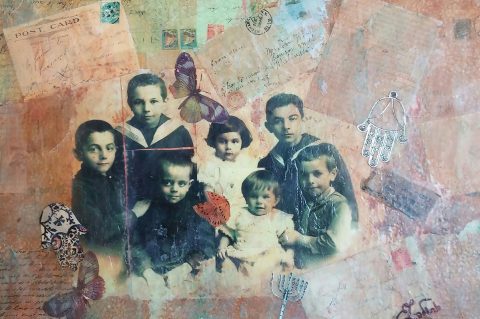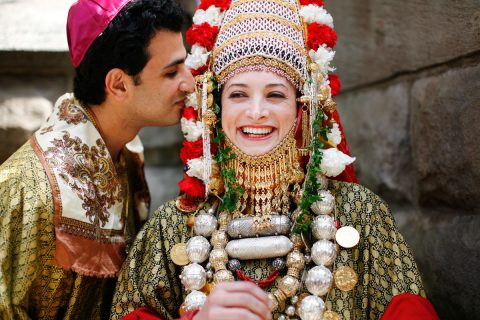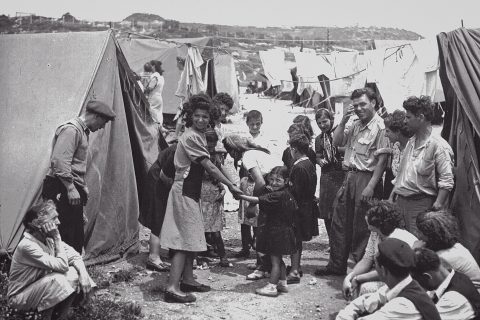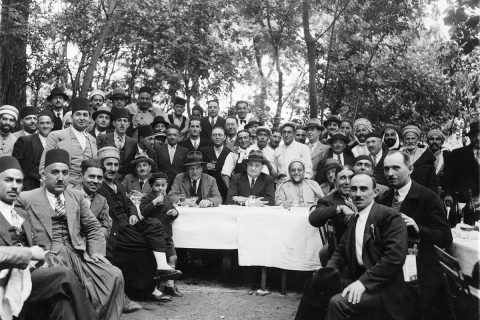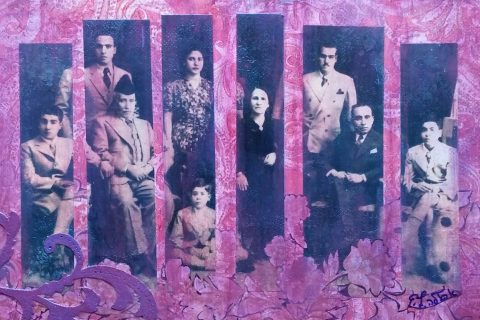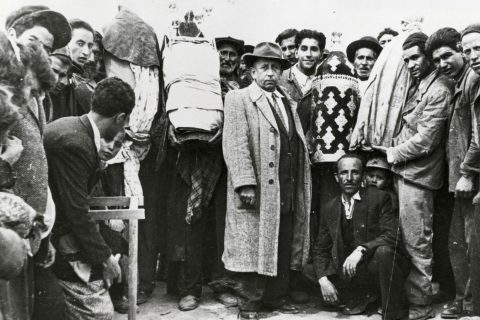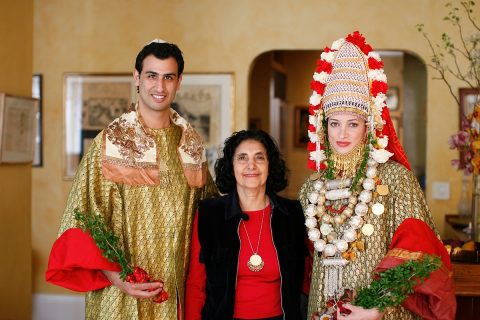
While Jews were commanded to be distinct from other nations, assimilation and acculturation play an important role in the successful integration of these Jewish Diasporic communities. These Diasporic communities were challenged in their social, political integration and had to find a balance in following regulations of the land while maintaining their Jewish identity. Dress was one way that demonstrates relationship and balance between maintaining distinct identities and acculturating into the greater society.
Objectives
- Students will differentiate between the preservation of distinct Jewish identities and their integration into other cultures.
- Students will see that Jews around the world were influenced by the cultures in which they lived.
- Students will acquaint themselves with Mizrahi customs and holidays and when special clothing is worn.
- Students will be able to articulate the values that inspire these clothing traditions.
Materials
- PowerPoint presentation for Lesson 2
- There are two ways to view with the slideshow. (PowerPoint online and PowerPoint installed on computer. The computer version has full functionality and more viewing options.
- Both versions have presentation notes aligned with the lesson plan.
- Kaftans (contact JIMENA to access costumes or purchase at costume store)
- Dried fruit (dates, almonds)
- Moroccan music
- Markers and crayons
- Appendix A – Midrash about Jewish clothing
- Appendix B – Mimouna Fact Cards
Procedures
Introduction
- Write the main question on the Board:
- “On what occasions did Middle Eastern, North African and Sephardi Jews wear special clothing?”
- “What did these clothes look like?”
- “What did they signify?”
- “Is special clothing worn today?”
- Review the Aim with the students.
- Project the PowerPoint Presentation
- PPT SLIDE #2 – (Shows people from around the world in distinct dress).
- ASK students “Where do you think these people came from? What makes you guess this?” (The rationale for this slide is to introduce students to differences around the world)
- PPT SLIDE #3– (Shows people in distinct dress eating food from their culture and lands).
- ASK students to infer. “Where do you think these people came from? What makes you guess this?” (Rationale is to introduce cultural distinction through food)
- PPT SLIDE #4 – (Shows people of different color/look but in Western dress)
- ASK students, “Where do these people come from? Where do they live? Why is it harder to distinguish them from the previous slides?
- DISCUSS how it becomes harder to identify people and their backgrounds when they blend in with the dominant culture. (The rationale for this slide is to introduce the concepts of acculturation or assimilation.)
- Teacher Note: Depending on the grade level you teach, provide the appropriate meaning for the terms acculturation and assimilation.
- SAY “Today we are going to learn about how Jewish people in Arab lands kept their Jewish identity while they lived within the larger Muslim culture around them.”
- PPT SLIDE #2 – (Shows people from around the world in distinct dress).
Body of Lesson
- PPT SLIDE #5– (Shows an image of Synagogues in Aleppo, Syria and Baghdad, Iraq)
- SAY “Before we point out the differences between Jews and their Muslim neighbors, let’s examine some of the similarities” (focusing on the concept of acculturation)
- DISCUSS The image of a synagogues and their similarity to the dominant culture’s architecture. Jews borrowed from their neighbors. They had to balance their Jewish identities and integrate into Muslim culture. How did they do this?
- PPT SLIDE #6 – (Shows Iranians and Iranian Jews who are in similar dress.)
a. EXPLAIN the concept of acculturation. - PPT SLIDE #7 – (Shows images of Jews in Middle Eastern dress.)
a. ASK “How did they look different than their Muslim neighbors? What were/are differences in dress for Jews?” (kippot or head covering, side curls) - PPT SLIDE #8 – Demonstrates what makes Jews different from other nations.
a. PASS OUT THE SOURCE SHEET from Appendix A to students and use the discussion questions to help students understand the relationship between clothing and the preservation of identity. If students are familiar with chevurta, the Jewish style of learning through dialogue, you can start off with an introduction to the text and then let students decipher the text using the discussion questions provided on the source sheet.
b. Discussion Questions- How did the people of Israel “Become a nation”? 2) What does it mean to “Become a nation”?
- What is the connection between food, clothing and language?
- What is “Jewish clothing”?
- Who wears it?
- When?
Mimouna Activity
Celebration time! Kaftan and Mimouna Activity!
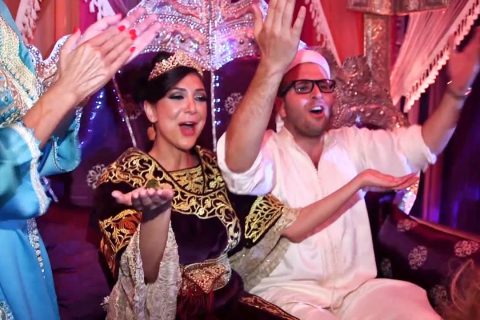
- Tell the students that Mimouna is a holiday celebrated at the end of Passover. Traditions of this celebration include, eating sweets, inviting in neighbors, singing, dancing, wearing special Kaftans and other celebratory clothing.
-
- The facilitator can add that Muslims and Jews both wore Kaftans and the celebration of Mimouna at the end of Passover was a chance for these two communities to come together to celebrate. Today in Israel where Mimouna is celebrated by many North African communities, Jews dress in Kaftans, dance to Moroccan music and eat North African foods. The Jewish values of Hachnasat Orchim (Inviting Guests) is emphasized- no invitation is needed for a Mimouna celebration, everyone is welcome! For more information about this celebration: Mimouna: A Delicious Way to Celebrate the End of Passover
- Relation with Muslims – “Mimouna symbolized North Africa, and specifically the close relations between Jews and Muslims there. In many places it was the Muslims who brought wheat, milk and butter to the Jews at the end of the holiday, so they could make food. Jews in Morocco were viewed as ones who blessed the land for the entire year, and the Muslims saw the holiday as an opportunity to pay back their Jewish neighbors. In the city of Azemmour, Muslims allowed the Jews to use their fields and gardens for the entire day, out of a belief that the Jews would bless the land and leave it fertile. For more information about the relations between Muslims and Jews in Morocco: Ten things you didn’t know about Mimouna
- The facilitator can add that Muslims and Jews both wore Kaftans and the celebration of Mimouna at the end of Passover was a chance for these two communities to come together to celebrate. Today in Israel where Mimouna is celebrated by many North African communities, Jews dress in Kaftans, dance to Moroccan music and eat North African foods. The Jewish values of Hachnasat Orchim (Inviting in Guests) is emphasized – no invitation is needed for a Mimouna celebration. Everyone is welcome!
2. PPT SLIDE #9 – Watch a video (1 min 50 sec.) of a young girl in Israel describing how she and her family celebrate the Mimouna. Tell the students that in preparation for our celebrations, we will each ‘learn and teach’ each other some aspect about the Mimouna celebration. In partners or groups, hand out the Mimouna facts cards, construction paper and markers and ask each team to share read the information, and present 2 interesting facts to share with the class (Appendix A – Mimouna Fact Cards)
3. PPT Slide #10 Play Moroccan music in the background as students work on their Mimouna Fact Cards.
4. After the students complete their assignments, the class reflects together and shares their information cards, drawings, presentations, etc.
5. After students share what they’ve learned about Mimouna, students will celebrate Mimouna for themselves by putting on kaftans, eating sweets and listen to some Moroccan music.
Conclusion
Discussion
- After or during the celebration the teacher facilitates a discussion:
- SAY “Today, (most of us) did something that we really never get a chance to do: We put ourselves in someone else’s shoes. We wore clothing and ate food and heard music that was new to us.”
- Discussion Questions
- What is the “authentic” clothing of Middle Eastern Jews?
- If the Midrash says we “became a nation” because we preserved our clothing, what clothing does the midrash refer to? What we wore before the years in exile? What we wore after living in Arab lands for centuries?
- Should Jews today wear clothing that separates them from other groups?
- How did this feel?
- What did I learn? What questions do I have?