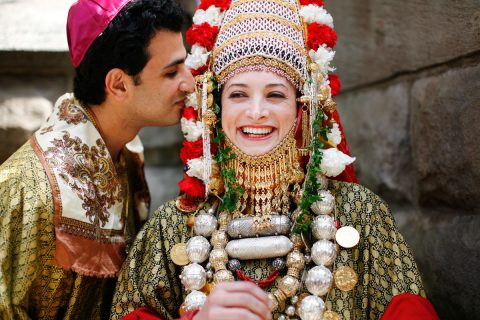
Jewish tradition has several pre-wedding customs to rejoice with and honor the bride and groom in the lead up to their big day. Henna parties are held for some Middle Eastern brides and are often celebrated a few days before the wedding, with close women friends and family. The aim of this lesson is for students to have the opportunity to learn about the symbolism and meaning of this Middle Eastern Jewish tradition.
Objectives
- Students will learn about the Moroccan and Yemenite tradition of the henna ceremony before weddings.
- Students will learn about the different elements in a henna ceremony.
- Students will learn about the values related to the henna ceremony, namely: celebration, health, prosperity.
Materials
- Computer and projector
- Costumes, scarves, kaftans and fez (hats) Moroccan or Yemenite Music
- Henna powder and water (to prepare the henna paste) NOTE: If you choose not to use Henna powder, you could find henna pens (safe and non-toxic for use) available for purchase online.
- Sweets or cookies (to place around the henna bowl) and a large tray to put the henna and sweets on.
- Appendix A – Henna Party Invitation
Procedures
Introduction: How do we celebrate?
- WRITE the Main Questions on the board:
- “What is the henna ceremony?” “
- Why do some Sephardi and Mizrachi Jews celebrate this tradition?”
- SAY: “Today we will share ways in which our families celebrate a happy occasion.
- ASK “How do you celebrate happy occasions in your family?” (It is best to go around the circle, giving every student an opportunity to share.) Student responses may include: birthdays, a Jewish lifecycle event, a special family anniversary.
- They may describe that the celebrations include music, dancing, special foods, dress, etc.
- TELL STUDENTS that today they will learn about how some Middle Eastern Jewish communities celebrate happy occasions. In Moroccan and Yemenite Jewish tradition, a henna ceremony is held prior to the Jewish wedding and other happy occasions (such as bar mitzvahs, lifecycle events like weaning, starting school, finishing a book of the Torah or coming out of mourning).
Body of Lesson
- ASK the students what they know about “Henna”?
- WRITE their responses on the board
- HAND OUT the Henna Party Invitation (Appendix A) to students and tell them that they will be watching a video of a Henna celebration.
- TELL STUDENTS to pay close attention to the ceremony in following video
- PLAY VIDEO
- After the students watch the video, ASK
- In these videos, you can see several parts of the henna ceremony: What did you see?
- How was this celebration the similar or different than celebrations in your family?
- (Student responses may include: Dancing with candles, blowing shofars; Wearing special, ornate costumes; Giving gold jewelry to the bride and groom; Dancing with the bride and groom; Applying the henna and celebrating)
- Review and discuss the information on the Henna Party Invitation (Appendix A) (together as a class)
-
- Henna Plant
- Biblical connection
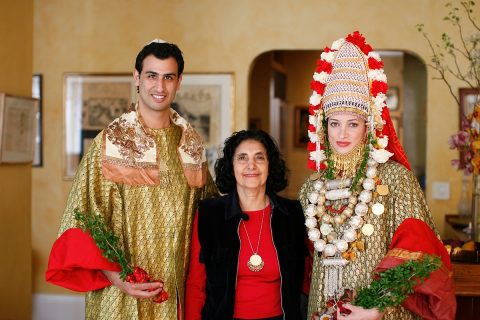
- Moroccan and Yemenite costumes
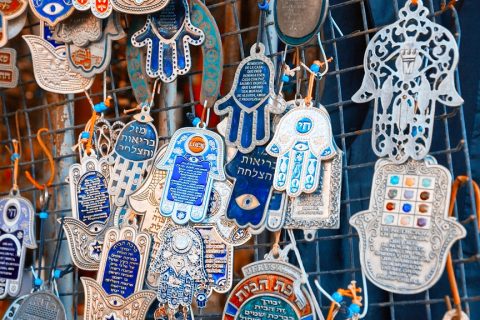
- Spiritual protection
- Celebratory song
Note to teacher: There are traditional songs for henna celebrations. One of the classic “Henna” songs that Moroccan and North African Jews listen to during the Henna ceremony is by Algerian Jewish composer Maurice El Medioni. The lyrics, translation and transliteration of the first verse of this song are printed in Henna Party Invitation (Appendix A).
- READ the lyrics aloud with the class.
- PLAY SONG and SING with the class. “Henna Song” – Ahalan Wa’Sa’alan / Maurice El Medioni
Suggestion: You may want to play the song twice. The first time the students will familiarize themselves with the sound of the words and melody. The second time the music is played, students will feel more comfortable reading and singing along with the music.
Conclusion
Just do it! Henna Ceremony
Students get the opportunity to incorporate what they have learned and enjoy a henna party in class. You can opt to do this lesson to celebrate something happy that has happened in class (finishing a book of the Torah, a chapter or Daf of Talmud) or a birthday or as a reward for an important achievement.)
1) Pass out the Kaftans and fez, scarves and other costumes and dress up!
2) Ask for two volunteers to “carry” the tray with the sweets and henna on it.
3) The remaining students celebrate with dance and/or clap while the students serving the treats do a “hakafa” or circle around the room (as music plays).
Henna
4) Students wait in line as the facilitator applies henna to the students’ hands. (See resources and external links for guidance)
5) If the facilitator knows how to ululate they can teach the students and make the sound every time someone gets henna applied to their hands.
How to Ululate – https://www.youtube.com/watch?v=tbcFbbsGVjk
6) In addition to this, the facilitator can prepare henna “pens” and the facilitator can demonstrate how to apply henna to create beautiful hand and body decorations.
Here are some examples of Henna hand designs: Jewish Henna
7) Writing Reflection
Students journal to reflect on their learning
- What surprised you today?
- What were some interesting discoveries?
- What do you want to learn more about?
- What can you do with what you know?
Resources and External Links
For background on this topic, you can visit the websites below:
Embracing A Jewish Henna Wedding Tradition: This custom is a treasured part of Moroccan Jewish and other Mizrahi marriage celebrations.
From <https://www.myjewishlearning.com/jewish-and/embracing-a-jewish-henna-wedding-tradition/>
Jewish Henna Traditions
From <http://www.hennabysienna.com/jewish-henna.html
The Henna Ceremony
From <http://jewcy.com/jewish-sex-and-love/henna_ceremony>
From <https://www.wikihow.com/Use-Henna-for-Skin>
How-To: Henna Tattoos
From <https://makezine.com/2010/08/10/how-to_henna_tattoos/>
How to Apply Henna for Beginners
From <https://www.youtube.com/watch?v=3ByugJ2ewYY>
How To: Henna Tutorial
From <https://www.youtube.com/watch?v=Q5vtLvx0wt0>
How to apply henna on your hands!
From <http://www.instructables.com/id/How-to-apply-Henna-Mehndi-on-your-Hands/>