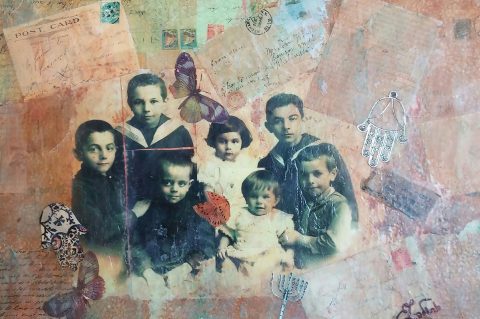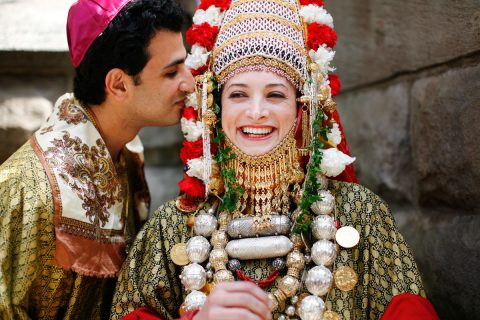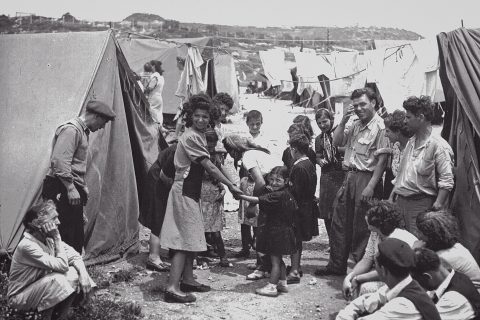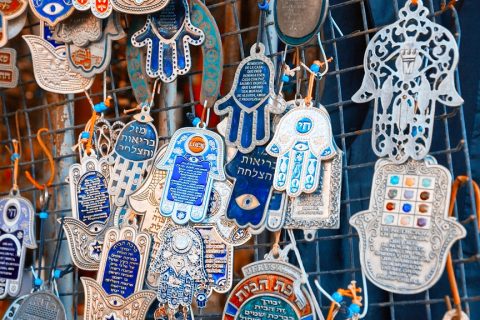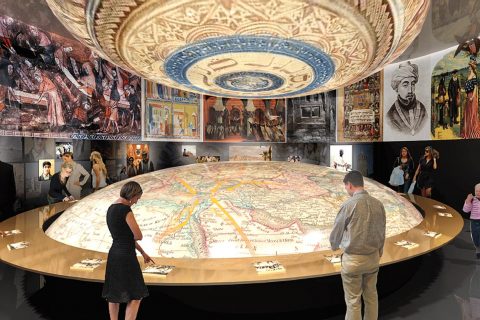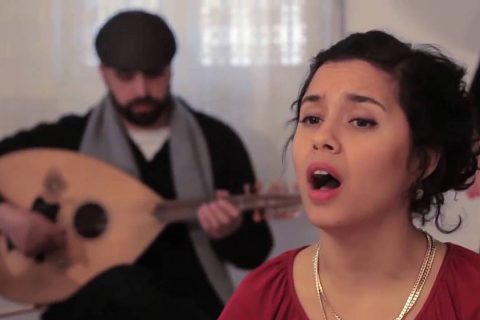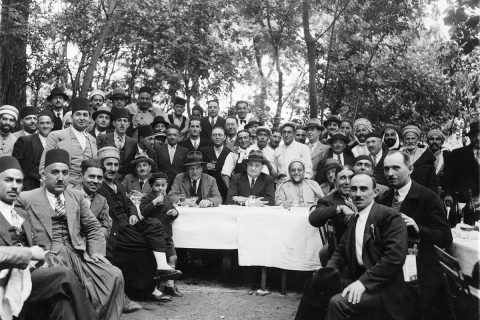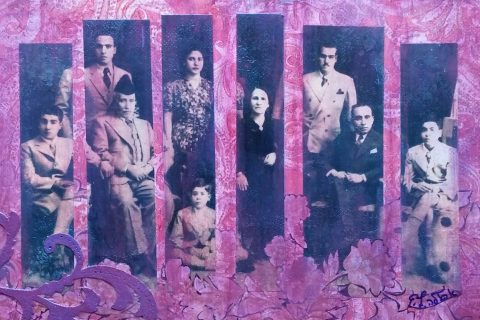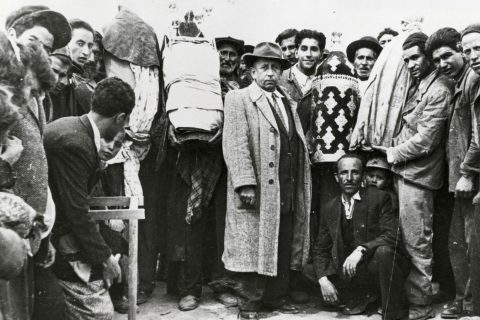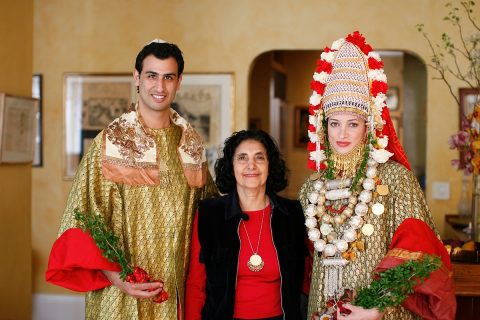
Retelling history is a powerful way for students to be active participants in shaping their identities and future. Jewish tradition insists that the Jewish people remember and act on their past. For example, Jewish holidays (e.g., Chanukah, Purim, Passover) are utilized in meaningful ways to retell history to younger generations. The aim of this lesson is to provide students with an opportunity to create books about the stories and experiences of Middle Eastern Jews, by gathering relevant information from a variety of sources with the intention of communicating knowledge to an audience. Written by Galia Avidar
Objectives
- Students will research relevant information about a Jewish community in the Middle East/North Africa.
- Students will design and create books/reports on their topics, selecting evidence to tell a story and cultivating a deeper understanding of primary sources.
- Students will share these books with their school community.
- Students will understand their role and the roles of others (NGOs – Non-governmental organizations) in advocating for and increasing awareness about important issues.
Materials
- Computer and projector
- Materials for creating books (be creative in finding material for book designs)
- Appendix A – Outline for Research Paper
| NOTE TO TEACHER
This lesson can be used in two ways: 1) As a culmination of the JIMENA curriculum or 2) As an introductory research project on Mizrahi Jewish communities around the world. This lesson requires time for students to gather, read, and review information. Material from other JIMENA lessons can be used as resources. While the suggestion is for students to create books to share with others, the final product can take on many different forms (e.g. digital books, blogs, webpages, PowerPoint presentations, magazine article, etc.). This lesson incorporates research skills that can be applied according to the grade you are teaching. The aim of this lesson is for students to share their newly found knowledge with others and pass on the historical events they learned. |
Procedures
Introduction
- WRITE the Main Questions on the board:
- How can our actions shape the telling of historical events
- What does it mean to be part of a community?
- Begin this lesson with a BRAINSTORM WITH CLASS about the term “participation”
- ASK CLASS students for examples of “positive participation.”
- ASK CLASS for examples of “negative participation.”
- DRAFT a working definition of “participation.”
- STUDENTS REFLECT and WRITE answers in journals to the following questions:
- How does an individual stand up for a principle or a belief
- What are the skills required to take such a stand?
- What are the challenges and risks involved when someone takes such a stand?
- ASK the students: What is history?
- The answer could be one word, quick responses, or a paragraph response to a writing prompt.
- STUDENTS SHARE responses in a class discussion.
- COLLECTIVELY NOTE the similar responses and ideas about what defines history.
- PROJECT WEBSITES ON SCREEN Share with students some websites that demonstrate how history remains alive through the participation of people in the community:
- HistoryFacing History and Ourselves https://www.facinghistory.org/
- Science/NatureSave our Environment: A National Coalition for the Environment https://saveourenvironment.org/
| NOTE TO TEACHER
You may choose to share other organizations that you are familiar with or have used in other subjects.
|
Body of Lesson
- SAY: The people at JIMENA are participating in the telling the story of Mizrahi In this lesson, we will learn how JIMENA presents the history of Mizrahi Jews and learn how we can assist JIMENA in spreading their message. We will do this by generating information, through books that we design, that can be shared and passed onto younger generations.
- PROJECT JIMENA WEBSITE on the screen and NAVIGATE through the website together.
- JIMENA: Jews Indigenous to the Middle East and North Africa From http://www.jimena.org/
- Walk students through the website:
- JIMENA mission statement
- The website’s layout
- The different Jewish communities: (Algerian, Egyptian, Moroccan, Yemenite, Libyan, Syrian, Iranian, Iraqi, Lebanese, Tunisian, and Turkish)
| NOTE TO TEACHER
Depending on the grade level, you can decide how you want to teach research skills. You can, first, choose to research one Jewish Mizrahi community together as a class. Later, you may assign individuals or groups of students to research other Mizrahi Jewish communities of interest.
|
- CLICK on one of the Jewish communities and GUIDE STUDENTS through the information on the website. Each Mizrahi experience features:
- Personal Stories
- Jewish History
- Culture
- Timeline
- Photo Gallery
- Current Events
- Resources
- PROVIDE RESEARCH OUTLINE and ASSIGN TOPICS to students for their project.
- Use the topics above and Appendix A as guide and adapt to your needs.
- STUDENTS WORK ON PROJECT over a period of time as allotted by the teacher.
- PROVIDE EXEMPLARS FOR STUDENTS to inspire quality work for their final book presentations.
- Planning the Project
- You will want to give the students guidelines for their projects. What should their books include? (Title, Table of contents, bibliography etc.)
- Discuss the various options for organizing the information. Will the books be thematic or chronological?
- What sorts of graphics will be included (maps, graphs, charts, photographs they will include, etc.)
- Discuss with students the kind of resources they might gather for their books. Where can they locate these resources?
- Work with the school librarian/media specialist to locate books that can be used as exemplars.
- Work with the technology teacher to create PowerPoint presentations or other online/digital presentations.
- Provide project materials needed to tell their story (photos and pictures from the internet, old newspapers and magazines, etc.)
Conclusion
- STUDENTS SHARE share their books with each other and the school community.
- STUDENTS DISCUSS/REFLECT on main questions:
- How can our actions shape the telling of historical events
- What does it mean to be part of a community?
Extension Activities
- COLLABORATE WITH THE ART TEACHER to transform written sections of their book to create a three-dimensional representation of a Mizrahi experience.
- COLLABORATE WITH JIMENA to create a student page on their website to share student work.
- STUDENTS INVESTIGATE other examples of individuals working for change in their communities.
Resources and External Links
For background on this topic, you can visit the websites below:
Facing History and Ourselves
From https://www.facinghistory.org/
Save our Environment: A National Coalition for the Environment
From https://saveourenvironment.org/
JIMENA: Jews Indigenous to the Middle East and North Africa
From http://www.jimena.org/